If you work in physical security, IT infrastructure, or operations at a large manufacturing or industrial facility, you already know ISC West is less of a trade show and more of a compass. It tells you where the industry is heading before most organizations have started to adjust.
This year felt like a turning point. The conversations on the floor were not about individual products. They were about how surveillance systems, access control platforms, and operational technology are starting to work as a single, connected infrastructure. For anyone managing security and IT at a production plant or distribution facility, that matters a lot.
Three themes came up over and over again during the show. Understanding them will help you make smarter decisions about the systems you are running today and the investments you are considering next.
AI-Powered Surveillance Is Now the Baseline, Not the Upgrade
For most of the past decade, AI in security cameras was marketed as a premium add-on. It was treated as something you considered after the core system was already in place, usually as a line item that got cut when budgets get tighter.
The concept of AI and surveillance analytics being a luxury is gone.
At ISC West 2026, AI-powered video analytics were positioned as the foundation of any serious surveillance deployment, not a feature layer on top of it. The distinction matters because it changes how integrators and end users think about camera selection, network design, and system design from the very beginning of a project.
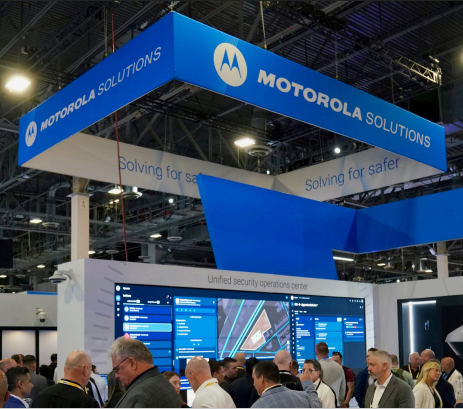
What made the demos compelling this year was not just the capability but the specificity. Modern intelligent surveillance systems are moving beyond motion detection. They are identifying unsafe behavior in real time, flagging PPE compliance violations, detecting when personnel enter restricted or hazardous zones, and generating incident summaries without requiring a security team member to manually review footage. For safety managers at industrial facilities, that represents a significant shift in how security technology supports daily operations.
A lot of this is being enabled by edge computing. Today’s commercial security cameras are doing considerably more on-device processing than they did even two or three years ago, which reduces the bandwidth load on your network and speeds up detection. For large-scale environments like manufacturing plants or logistics hubs with dozens or hundreds of cameras, efficiency matters both technically and financially.
The practical implication for security and IT managers is not that you need to replace everything immediately. It is that you should be asking whether your next camera refresh is being specked with AI analytics in mind. Starting with targeted use cases, perimeter monitoring, access point compliance, and safety zone enforcement tends to demonstrate value quickly and build organizational support for broader rollouts.
Access Control Integration Is Shifting From Door Management to Identity Intelligence
Access control has always been a well-defined problem. You have a facility, you have people who should and should not be in certain areas, and you use credentials to enforce that. Card readers, key fobs, PIN pads. The concept of enterprise access control is simple.
That concept is not going away, but it is being significantly extended.
What stood out at ISC West this year was how commercial access control systems are being repositioned around identity rather than entry. The question is no longer just whether someone is authorized to open a door. It is about understanding behavioral patterns across your entire facility over time.
Mobile credentials were a major focus throughout the show. Physical access cards are being replaced by smartphone-based authentication, which creates a more dynamic and auditable access environment. Biometric access control, particularly for high-security areas in manufacturing and critical infrastructure, also saw considerable attention, with a number of integrators presenting deployments that combine biometric verification with existing credential infrastructure rather than requiring a full overhaul of their system.
The more significant shift, though, was around continuous monitoring. Modern access control platforms are moving beyond the single authentication event at the door and toward ongoing pattern analysis. Are credentials being shared between employees? Are doors in sensitive areas being propped open during shift changes? Is someone accessing a restricted zone outside of their normal work hours? These are the kinds of operational security signals that used to sit buried in access logs that nobody had time to review. Increasingly, they are being surfaced automatically by the access control software itself.
For IT teams, this is where physical security integration starts to overlap directly with cybersecurity and identity management. The same user who badged into the facility this morning is also accessing your network, your ERP system, and your operational technology environment. When your physical access control platform is integrated with your IT security stack, you gain visibility that neither system could provide on its own. That is a meaningful capability for any organization operating under compliance frameworks like NIST, CMMC, or industry-specific safety standards.
Operations teams also stand to benefit in ways that go beyond security. Movement and access data from a well-configured access control system can reveal genuine operational insights, where facility bottlenecks occur during shift transitions, how personnel are distributed across a site at any given time, and whether certain process flows are creating unintended risk exposure.
Converged Security Systems Are Becoming the Expectation, Not the Exception
If there was a single concept that connected every major conversation at ISC West 2026, it was convergence.

The traditional model of physical security operating in its own silo, managed by a separate team using separate tools on a separate network, is no longer viable in most modern facility environments. The expectation now is that your security camera infrastructure, access control system, building management technology, and IT network operate as a unified, data-sharing ecosystem.
Cloud-based security management platforms were everywhere at the show. Their pitch was consistently about centralized visibility across multiple locations, simplified administration, and the ability to integrate surveillance and access control data with other business systems. For organizations managing security across multiple production facilities or regional distribution centers, that kind of unified management is increasingly a requirement rather than a convenience.
The cybersecurity implications of this convergence were also a prominent topic. As IP cameras, access control panels, and other physical security devices become network-connected endpoints, they need to be managed with the same rigor as any other IT asset. Firmware update processes, network segmentation, device authentication, and vulnerability management all apply. Integrators and end users who have treated physical security devices as outside the scope of IT security policy are finding that posture increasingly difficult to defend, particularly in regulated industries.
One of the more candid conversations happening throughout the show was about organizational alignment. The technology for converged security systems exists. What often prevents organizations from realizing its full value is the gap between security teams, IT departments, and operations groups that have historically operated independently and sometimes have competing priorities. The facilities and manufacturers who are getting the most out of their security infrastructure are the ones who have brought those groups to the table together, not just for implementation, but for ongoing planning and decision making.
What This Means for Security and IT in Industrial and Manufacturing Environments
Taken together, these three shifts point toward something larger than any individual product category. Security technology is moving from a cost center to an operational asset. The same infrastructure you deploy to protect your facility is increasingly capable of generating data that informs safety programs, supports compliance reporting, reveals operational inefficiencies, and reduces incident response time.
For the people responsible for managing security and IT at production facilities, that expanded role creates both an opportunity and a responsibility. The systems you specify and install today will shape how your organization operates for the next several years. Approaching those decisions with an eye toward integration, scalability, and cross-functional value will matter considerably more than optimizing for upfront cost alone.
The clearest signal from ISC West 2026 was not any specific product announcement. It was that the organizations investing most intelligently in physical security camera systems and access control integration right now are not just thinking about protection. They are thinking about what their security infrastructure can tell them, and how to use that information to run a better operation every day.
The best time to evaluate your security infrastructure is before something forces you to. If you are not sure whether your current system is positioned to support where the industry is heading, we would love to help you and answer all your questions. Schedule a free consultation today.